
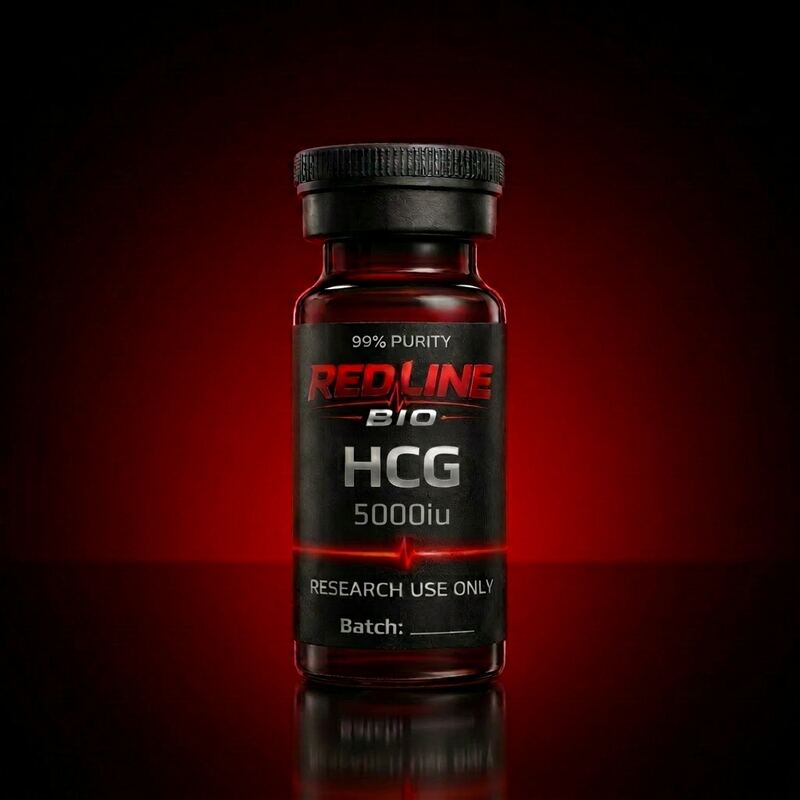
HCG
Human Chorionic Gonadotropin (hCG) glycoprotein hormone for reproductive endocrinology, LH-receptor signaling, and testosterone production research.
Select size
For research purposes only. Not for human consumption.
Mechanism of Action
Human Chorionic Gonadotropin (hCG) is a glycoprotein hormone composed of an alpha and beta subunit that mimics luteinizing hormone (LH) by binding to LH/CG receptors on Leydig cells, stimulating endogenous testosterone production and supporting gonadal function in reproductive endocrinology research.
How It Works
- 1
Binds LH/CG receptors on testicular Leydig cells, activating the cAMP/PKA pathway to drive steroidogenesis and testosterone synthesis
- 2
Maintains testicular volume and intratesticular testosterone levels in suppressed-HPG-axis research models
- 3
Stimulates ovarian theca and granulosa cells, supporting ovulation and corpus luteum function in female reproductive studies
- 4
Sustains progesterone production from the corpus luteum during early-pregnancy research models
- 5
Used as an LH-mimetic probe to investigate gonadotropin receptor signaling and downstream steroid hormone pathways
Key Research Benefits
- Endogenous testosterone production research
- HPG-axis recovery & restart models
- Testicular volume & spermatogenesis studies
- Reproductive endocrinology & fertility research
- Steroidogenesis pathway investigation
Each vial contains 5000iu of lyophilized hCG. Reconstitute with bacteriostatic water and store under refrigeration (2–8°C) post-reconstitution; use within 30 days for optimal stability. hCG is one of the most extensively characterized glycoprotein hormones in reproductive and endocrine research. For research use only — not for human consumption.
