Series M
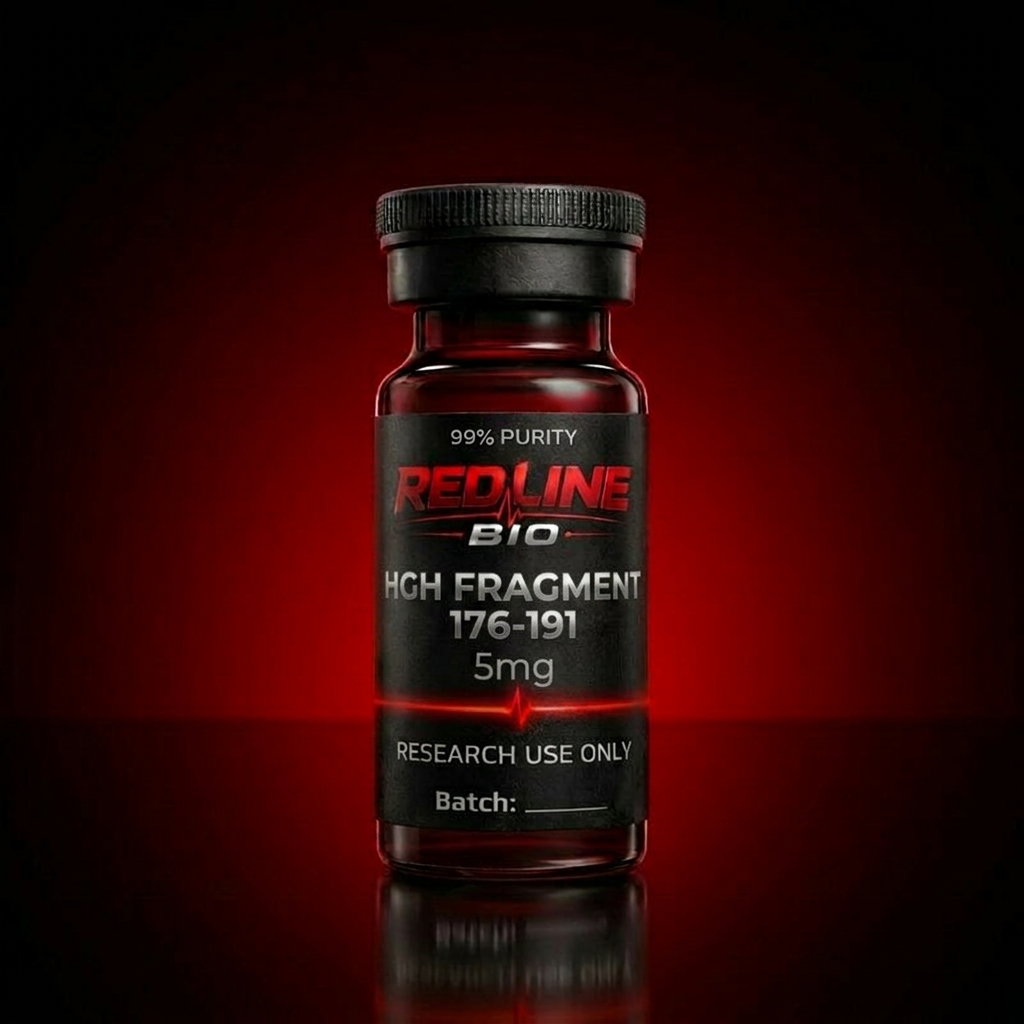
99% PureHGH Fragment 176-191For research use only. Not for human consumption.
Growth hormone fragment, residues 176-191 · 99% HPLC · lyophilized powder
Select size
$44.00USD/ 5mg
✓ View Certificate of Analysis (COA)
For research purposes only. Not for human consumption.
Material Identity
- Designation
- HGH Fragment 176-191
- Classification
- Series M
- Assay Purity
- 99%
- Unit Size
- 5mg
- CAS Registry No.
- 66004-57-7
- Molecular Formula
- C78H125N23O23S2
- Molecular Weight
- 1817.09 g/mol
- Appearance
- Lyophilized white to off-white powder
- Storage
- Store at -20 °C, protected from light and moisture
- Analytical Testing
- Independent third-party laboratory analysis on file
Research use only. Not for human or veterinary use. No handling, preparation, or application guidance is provided.