
Redline Bio
    Back to catalog
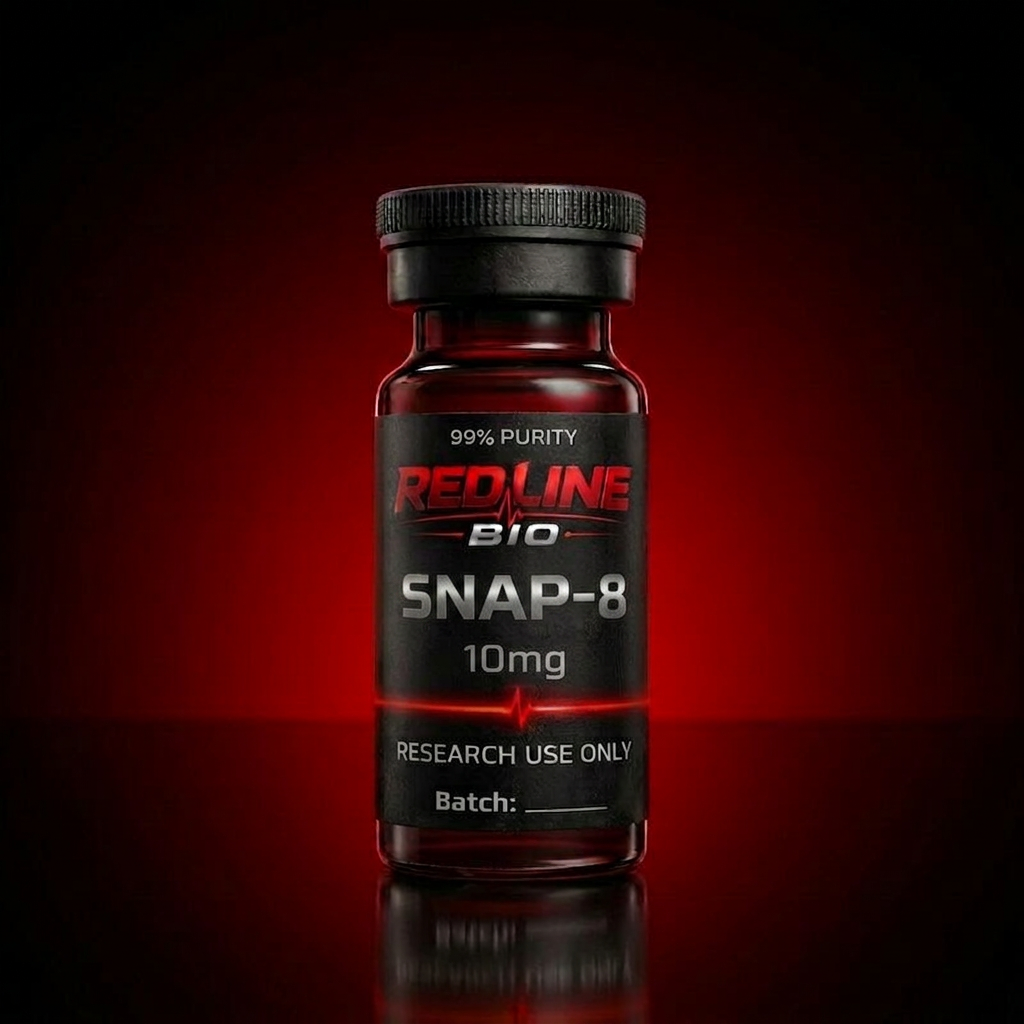
    SNAP-8 research peptide vial
    Skin & Hair
    99% Pure

    SNAP-8

    Acetyl Octapeptide-3 — elongated SNAP-25 mimetic octapeptide for SNARE complex inhibition, neurotransmitter release, and topical expression-line research

    Select size

    $49.00/ 10mg
    ✓ View Certificate of Analysis (COA)

    For research purposes only. Not for human consumption.

    Mechanism of Action

    SNAP-8 (Acetyl Octapeptide-3) is an elongated, acetylated octapeptide derivative of Argireline (Acetyl Hexapeptide-3) that mimics the N-terminal end of SNAP-25, a core component of the SNARE protein complex responsible for neurotransmitter (acetylcholine) release at the neuromuscular junction. By competitively inhibiting SNARE assembly, SNAP-8 attenuates vesicular acetylcholine exocytosis in research models — producing a topical, reversible reduction in muscle contraction signaling studied in expression-line and dermal-aging models.

    How It Works

    1. 1

      Mimics the N-terminal SNAP-25 sequence and competes for the SNARE complex binding site

    2. 2

      Inhibits assembly of the SNARE ternary complex (SNAP-25 / syntaxin / synaptobrevin)

    3. 3

      Reduces calcium-dependent vesicle fusion and acetylcholine release at neuromuscular junctions

    4. 4

      Produces a localized, reversible decrease in facial muscle micro-contractions in topical research models

    5. 5

      Studied for improved penetration and potency vs Argireline due to its extended 8-amino acid sequence

    Key Research Benefits

    • SNARE complex and exocytosis pathway research
    • Topical expression-line and dermal-aging studies
    • Neuromuscular junction acetylcholine release investigation
    • Non-toxin-based muscle contraction modulation research
    • Cosmetic peptide formulation and skin-penetration studies
    • Comparative research vs Argireline (Acetyl Hexapeptide-3)

    SNAP-8 is widely studied in topical cosmetic peptide research as a needle-free alternative to botulinum toxin models for investigating dynamic expression-line formation. Often formulated into serums and creams at 5–10% concentration in dermal research. Strictly for laboratory and research use — not for human consumption.