
Redline Bio
    Back to catalog
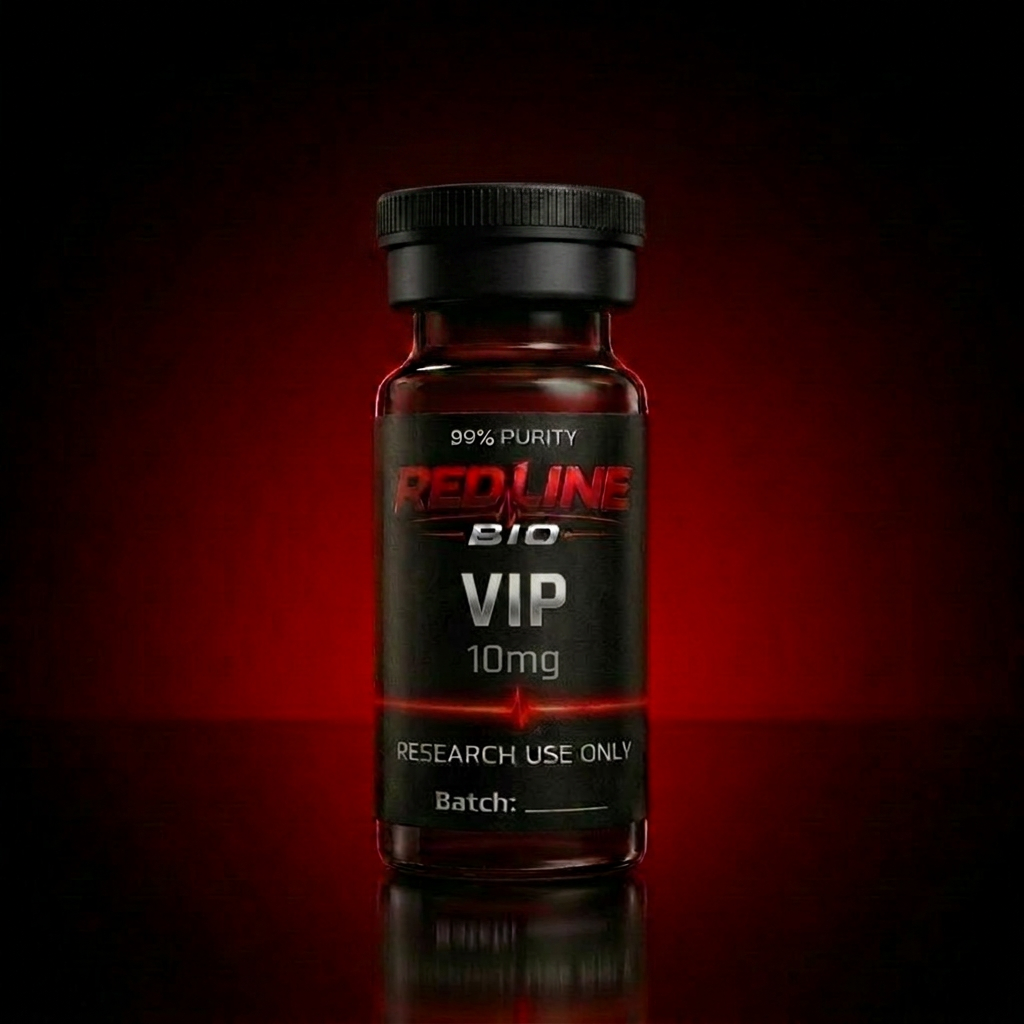
    VIP research peptide vial
    Recovery
    99% Pure

    VIP

    Vasoactive Intestinal Peptide — 28-amino acid neuropeptide (VPAC1/VPAC2 agonist) for immune modulation, vasodilation, and neuroinflammation research

    Select size

    $61.00/ 10mg
    ✓ View Certificate of Analysis (COA)

    For research purposes only. Not for human consumption.

    Mechanism of Action

    VIP (Vasoactive Intestinal Peptide) is a 28-amino acid neuropeptide belonging to the secretin/glucagon superfamily. It signals through the class B G-protein-coupled receptors VPAC1 and VPAC2, activating adenylate cyclase and elevating intracellular cAMP to drive vasodilation, smooth-muscle relaxation, neuroprotection, and immune modulation across the nervous, cardiovascular, pulmonary, and gastrointestinal systems.

    How It Works

    1. 1

      Binds VPAC1 and VPAC2 receptors to activate Gs → adenylate cyclase → cAMP/PKA signaling

    2. 2

      Induces vasodilation and bronchodilation via smooth-muscle relaxation

    3. 3

      Modulates T-cell polarization toward a regulatory/anti-inflammatory Th2 phenotype

    4. 4

      Suppresses pro-inflammatory cytokines (TNF-α, IL-6, IL-12) and NF-κB signaling

    5. 5

      Supports circadian rhythm entrainment via VPAC2 signaling in the suprachiasmatic nucleus

    6. 6

      Studied for neuroprotective effects on dopaminergic neurons and microglial activation

    Key Research Benefits

    • Neuropeptide signaling and VPAC1/VPAC2 receptor research
    • Anti-inflammatory and immune modulation studies
    • Pulmonary and cardiovascular vasodilation models
    • Circadian rhythm and suprachiasmatic nucleus investigation
    • Neuroprotection and neurodegenerative disease research
    • Sarcoidosis, CIRS, and mast cell activation pathway studies

    VIP has been investigated in clinical research for pulmonary hypertension, sarcoidosis, and chronic inflammatory response syndrome (CIRS), with intranasal delivery studied for direct CNS access. Commonly explored alongside BPC-157, Thymalin, and KPV in immune-modulation and neuroinflammation protocols. Strictly research use only — not for human or veterinary administration.